Showing posts with label Abdulsattar Doshouki. Show all posts

The Hostility of the Islamic Republic and Its Agents Toward International Mother Language Day

Abdul Sattar Doshouki, Center for Balochistan Studies — London February 21, 2022

Abdul Sattar Doshouki

February 21, 2022 marks International Mother Language Day. Today, I watched portions of the UNESCO conference live on the importance of mother languages. United Nations officials and experts from various countries spoke on this year’s theme, which focused on the challenges and opportunities of employing modern technology in multilingual education.

Our Ashura Mourning and International Mother Language Day

By Abdol-Sattar Dosouki – February 20, 2021

Abdul Sattar Doshouki

"Those who are well cannot feel the pain of the wounded,
And thus I speak of my wounds only to those who can empathize.

Talking of bees is futile to someone never stung,
For without shared experience, my plight will seem like a tale."

Once again, February 21st (International Mother Language Day), is approaching—a day that resembles Ashura mourning for the "non-Persian-speaking" and ethnolinguistic minorities of Iran. Once again, Baluchis, Turks, Kurds, and others will lament the injustices done to their mother tongues, mourning in elegiac processions and dirges. This, in a country that exclusively reveres the Persian language, treating all other languages as "spares."

Why Isn’t International Mother Language Day Celebrated in Iran?

Abdul Sattar DoshoukiBalochistan Studies Centre – London, February 2017

Abdolsattar Doshouki

February 21 is an international occasion to celebrate International Mother Language Day, as designated by the United Nations. Unfortunately, this significant day receives little attention in Iran. Persian-speaking compatriots, having never been deprived of their natural and legal right to use their mother tongue, see no reason to appreciate it through celebration. Meanwhile, other ethnic groups in Iran are not allowed to express their grievances about the bitter fate of their mother tongues in a "monolingual" country like Iran, nor can they demand their rights.

Preserve Persian; Spare the Other Languages

By Dr. Abdul Sattar Doshouki - February 21, 2015

Today, February 21, is International Mother Language Day, designated by the United Nations. There are numerous international treaties and charters to which the Iranian government is committed, obliging it to fully support and safeguard the linguistic and cultural heritage within the country. Article 15 of the Constitution of the Islamic Republic of Iran explicitly states that the use of ethnic and local languages in the press and mass media, as well as the teaching of their literature in schools alongside Persian, is permitted.

The Double Oppression We Have Faced and Continue to Face

Abdul Sattar Doshouki - Wednesday, February 20, 2013

Abdolsattar Doshouki is a political analyst, activist, and the director of the Balochistan Studies Center in London.

Deprivation from education in one’s mother tongue is not only a disregard for the flawed constitution of the Islamic Republic of Iran and a blatant violation of human rights but also has significant consequences for the future well-being and civic participation of Iran's ethnic groups, particularly the Baluch, Turks, Arabs, Turkmen, and Kurds. To understand this unjust and painful reality, one must confront the bitter truth of persistent discrimination in our country.

Is Persian the Only Sweet Language?

By Abdul Sattar Doshouki - February 21, 2011

Abdolsattar Doshouki, a political analyst, activist,
and the director of the Balochistan Studies Center in London.

Today, Monday, February 21, marks International Mother Language Day. Fifty-nine years ago, on this day (February 21, 1952), students in Bangladesh, which was then part of Pakistan, protested to demand the recognition of Bengali, a language ranked sixth worldwide regarding the number of speakers. The Pakistani army, whose official language was Urdu—a language ranked twentieth globally in terms of the number of speakers—responded to this natural and "inherent" right with molten lead, brutally suppressing the peaceful student gathering. At the time, Pakistan consisted of five major provinces: Bengal (now Bangladesh), Punjab, Sarhad (Pashtunistan), Sindh, and Balochistan. Urdu was the mother tongue of less than 4% of Pakistan’s population. It took nearly half a century for UNESCO’s General Conference, in November 1999, to declare that bloody day as International Mother Language Day.

Experts: Discrimination Against Ethnic Groups in Iran Is Institutionalized

Deutsche Welle Persian – Taher Shir Mohammadi - September 8, 2010

The UN Committee on the Elimination of Racial Discrimination has strongly criticized the situation of ethnic groups in Iran in its periodic report. Deutsche Welle sought the opinions of two experts on ethnic issues in Iran: Dr. Kamal Sido and Abdolsattar Doshouki.

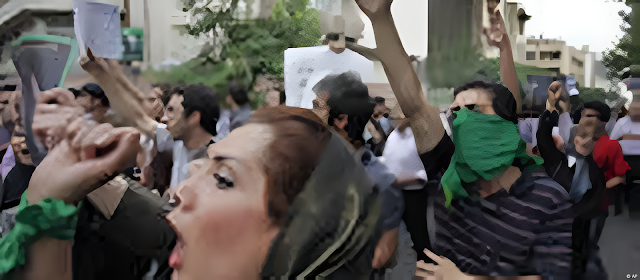
Protests in Iran and the Role of Ethnic Groups

Taher Shir Mohammadi - Deutsche Welle Persian - 24 June 2009

Protests Against the Announced Election Results

In regions where Iran’s ethnic minorities live, reformist candidates have historically won the majority of votes in presidential elections. How was it this time, and are ethnic groups also protesting the election results?

A Roundtable on the Role of Ethnic Groups in the Protests

Deutsche Welle discussed the role of ethnic groups in the current protests with Yousef Azizi Benitorof, an Iranian Arab writer and member of the Iranian Writers’ Association; Dr. Abdolsattar Doshoki, a Baluch political activist; and Alaeddin, an activist in the Azerbaijani National Movement in London. They shared their perspectives on the role of ethnic groups in the protests in Iran.

Will Federalism Lead to the Disintegration of Iran?

Dr. Abdol Sattar Doshoki - April 30, 2009

Dr. Abdol Sattar Doshoki

It seems that the word "federalism" is an unappealing term to the political ears of many compatriots, as they do not consider it a reliable or suitable system for managing the affairs of our country. Advocates and opponents of federalism often defend their positions resolutely and sometimes passionately without a scientific, historical, or objective analysis of the various federal systems in more than twenty-five democratic countries worldwide, or an evaluation of its compatibility with the future of Iran. This article aims to inform and dissect the contentious issue of federalism, free from any biased justification or rejection, to provide compatriots with a deeper understanding of the subject. Opposition to federalism can be reasonable and understandable if it is based on logic and argument, rather than mere prejudice and fear.

Ethnic Groups and the 1979 Iranian Revolution

Taher Shir Mohammad - Deutsche Welle Persian, February 12, 2009

1978 Tabriz protests

Ethnic groups played a significant role in the success of the 1979 Revolution. But were their hopes and demands fulfilled after the revolution? What is their current view of the revolution and the country's ongoing issues? Ethnic experts answer these questions for Deutsche Welle.

According to ethnic group experts, including Yousef Azizi Beniorof, an Iranian Arab writer, throughout modern Iranian history, from the Constitutional Revolution to the 1979 Revolution, Tehran could not complete its revolutions without the involvement of Tabriz.

Seminar on the Role of Ethnic Groups in Iran's Future

Mehrdad Farahmand - BBC Persian - May 17, 2004

On Sunday, May 16, a seminar titled The Role of Iranian Ethnic Groups in Establishing Democracy and Iran's Future Policies was held in London.

This one-day seminar, hosted at the Polish Center in London and attended by over ninety participants, featured representatives from the Awakening Movement of Azerbaijan, the Democratic Party of Iranian Kurdistan, the Ahwaz Democratic Solidarity Party, and the United Front of Iranian Balochistan. Additionally, independent political and ethnic figures gave speeches, and a message was read on behalf of the Organization of the Majority Fadaiyan of the Iranian People.