Showing posts with label Gender. Show all posts

Exile, Books, and an Unfinished Dream

Sharifeh Jafari - 17 May 2026 

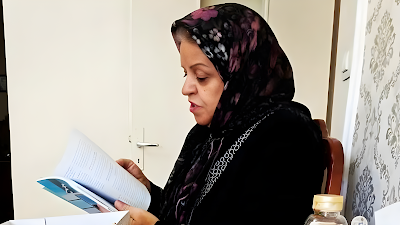
Sharifeh Jafari, Director, Pinar Publishing

Today in Berlin, with the coordination of Gardoon Publishing, founded by the late Abbas Maroufi, several publishers had gathered to organize a book fair parallel to the Tehran International Book Fair. Although I knew that visiting this exhibition and Hedayat Café would revive memories of the vibrant days when I attended the Tehran Book Fair as a publisher—and would reopen old wounds—I decided, after years of living in Berlin, to visit the bookstore and the exhibition held alongside it.

The Price of Being Unrecognized: Epistemic Exclusion and the Burden of Speaking as an Azerbaijani Turk Woman in Academia

 By Sevil Suleymani - October 15, 2025

Across post-colonial and Global South scholarship, a growing body of work has shed light on how colonial legacies and global hierarchies shape knowledge production. Yet, even within these critical frameworks, voices from within the Global South, especially women from marginalized communities, are often excluded or misrecognized. Scholars such as Gayatri Spivak, Chandra Mohanty, and Lila Abu-Lughod have long argued that women in the Global South are not merely subjects of oppression but thinkers whose epistemic contributions are routinely devalued. They face layered forms of marginalization within both national contexts and transnational academic spaces, with epistemic injustice emerging as one of the most pervasive mechanisms of exclusion. Miranda Fricker’s work on epistemic injustice has been particularly influential in exposing how people are wronged in their capacity as knowers, primarily through testimonial and hermeneutical deficits. In the case of marginalized women in the Global South, these injustices occur when they speak and/or begin long before that, in the very frameworks that determine who gets to speak and whose words are heard.

The Ethnicization of Crime: A Sociological Reading of Elahe Hosseinnezhad’s Murder

Etek Yazı – 9 June 2025

The Murder of Elahe Hosseinnezhad and the Ethnicization of Crime in Iran

The murder of Elahe Hosseinnezhad has exposed deep fractures in Iranian society, where mourning can quickly give way to marginalization. As public outrage swelled, so too did a troubling shift in discourse—one that placed ethnicity, rather than the root causes of violence, on trial. From media headlines to social media commentary, the focus turned toward the ethnic identity of the alleged perpetrator, evoking long-standing stereotypes about Turks and other non-Persian communities. In this context, sympathy for the victim became a vehicle for scapegoating, and the crime itself was reframed through a lens of racial and regional prejudice. This article interrogates how media narratives and public discourse reproduce Orientalist logics within Iran’s internal borders, constructing “monsters from the periphery” and obscuring structural violence behind ethnic blame. Ultimately, it raises critical questions about who is allowed to be mourned, who is allowed to be demonized, and how national identity is policed through moments of collective grief.

Early Marriages in Iran: East Azerbaijan Ranks Second

Hamid Melikoglu, Voice of America, January 28, 2025

Child Marriage in Iran

Due to the lack of regular official statistics on early marriages since 2023, there is no precise data on the situation in various regions of Iran. However, according to Iranian media reports, early marriages remain a serious problem for families and society in East Azerbaijan.

According to existing statistics, this province ranks second after Razavi Khorasan in terms of underage marriages. The Sistan and Baluchestan region is ranked third.

The Court Date for Nigar Dabbaghi, Accused of Insulting Iran’s Supreme Leader in Tabriz, Has Been Set

 Alirza Quluncu, Voice of America, January 28, 2025

Nigar Dabbaghi

Nigar Dabbaghi, a young protester who was temporarily released on a 400 million Toman bail after being held in custody for two weeks last November, has been informed that her court hearing will take place on February 19.

This information was shared on the X account of former political prisoner Armita Pavir and human rights platforms.

"Nigar Dabbaghi is very worried about her court session on February 19. Please, let’s be her voice as much as we can. She is only 17 years old," Armita Pavir shared on her X account.

Family of Arzu Badri, Severely Injured by Police Gunfire, Faces Continued Pressure

Hamid Melikoglu, Voice of America, December 29, 2024

Arzu Badri lies in the hospital bed.

Arzu Badri, an ethnic Turk woman from Nur, a city in Iran’s Mazandaran province, remains unable to walk after being severely injured by police gunfire in July. Doctors report that her chances of regaining the ability to walk are extremely low.

Women’s rights activist Masih Alinejad shared on the X platform that Arzu Badri’s family is under pressure to remain silent. “Arzu is fighting not only her severe condition in the hospital but also the regime’s relentless efforts to silence her family,” Alinejad stated.

Arzu Badri, originally from Azerbaijan, was a passenger in a vehicle traveling from Nur to Babolsar when the police opened fire on her car, alleging a violation of hijab regulations. The gunfire caused severe spinal injuries to Arzu.

Musa Berzin: The New Hijab Law Increases Penalties and Legalizes Previously Illegal Punishments

Alirza Quluncu, Voice of America, December 07, 2024

Musa Berzin, human rights lawyer

The Speaker of the Iranian Parliament, Mohammad Bagher Ghalibaf, has announced that the process for implementing the new hijab law will begin on December 13. Lawyer Musa Berzin spoke to Voice of America about the penalties, restrictions, and incentives outlined in the law known as "Hijab and Chastity."

Sina Yousefi: The Adoption of the "Hijab and Chastity" Law Legalizes Violence Against Women in Iran

Alirza Quluncu, Voice of America, September 25, 2024

Sina Yousefi, Human Rights Lawyer

The Guardian Council in Iran recently passed the "Hijab and Chastity" law, which strengthens the state’s control over women's clothing. According to a report from the ISNA agency, the speaker of the Iranian parliament is expected to announce the new law soon.

In an interview with Voice of America, lawyer Sina Yousefi commented on the new law, stating that it legalizes the violence already being perpetrated against women in Iran.

Zohreh Vafaee, Writer, Journalist, and Cultural Activist from Tabriz Has Passed Away

23rd September 2024

Zohreh Vafaee

Zohreh Vafaee, Turkish writer, journalist, feminist and cultural activist from Tabriz, Azerbaijan has passed away.

Vafaee was the editor-in-chief of the critical-humorous monthly "Juvalduz," the owner of the "Zeynab Pasha" publishing house, and the author and editor of several books, most of which are in Turkish and related to the history and culture of Azerbaijan.

Some of her works include "Ushaq Mektebi," "Alqishlar and Qarqishlar," "El Bayatilar," "Oyunlar," "Sinamalar," "Shahsonlar," "El Mahnilari," and "Qara Qoyunlular - Agh Qoyunlular."

Amir Mehdipur: The Iranian Government Does Not Want to Back Down on the Hijab Issue

 Alirza Quluncu, Voice of America, August 31, 2024

Amir Mehdipur, Human Rights Lawyer

The implementation of hijab regulations in various cities of Iran has led to an increase in cases of police violence against women and even teenage girls. Recently, there have been reports of a young woman being shot in her car and images showing teenage girls being beaten by officials.

In an interview with Voice of America, lawyer Amir Mehdipur stated that violence against women due to the hijab regulations is illegal. However, he emphasized that the government's strict instructions to take severe measures against those violating the hijab rules have made such acts of violence almost inevitable.


Mehsa Mehdili: For the Iranian Regime, the Hijab Is More of a Political Issue Than a Religious One

Alirza Quluncu, Voice of America, June 11, 2024

Mehsa Mehdili

The Iranian government continues to aggressively implement its new "Noor Project," aimed at tightening control over women's clothing, even as the country approaches elections—a time when the political atmosphere usually softens.

In an interview with Voice of America, political analyst Mehsa Mehdili emphasizes that the issue of mandatory hijab has always been more of a political matter than a religious one for the Islamic Republic. According to her, the authorities, fearing the growing resistance against compulsory hijab in society, are no longer willing to show any leniency.


Women’s Works Book House Opens in Tabriz

Alirza Quluncu, Voice of America, April 20, 2024

"Opening Ceremony of the Women’s Works Book House in Tabriz (Source: Elbilimi Telegram Channel)"

On April 20, 2024, a ceremony was held for the opening of the Women’s Works Book House, established by cultural activists in Tabriz.

The Women’s Works Book House was founded with the initiative of the El Bilimi institution, which operates in Iranian Azerbaijan, and with the support of cultural activists, in the central building of the El Bilimi institution in Tabriz.

Nahid Jafari: Tehran's Aggressive Hijab Policy Aims to Create Fear and Division in Society

Alirza Quluncu, Voice of America, April 13, 2024

Nahid Jafari

While the process of legalizing Iran's "Hijab and Modesty" project, which has been a major issue in the country since last year, has not yet been completed, police commanders in various provinces, including Iranian Azerbaijan, have announced that they have entered a new phase of implementing mandatory hijab rules as of April 13.

In an interview with Voice of America, Nahid Jafari, a professor at Farmingdale State College in New York, stated that the Iranian government is pursuing an aggressive policy under the "Hijab and Modesty" project with the goal of creating fear and division in society.


Suheyla Azizi: The Islamic Republic of Iran Knows That If Women Are Free, the Entire Society Will Be Free

Alirza Quluncu, Voice of America, March 08, 2024

Suheyla Azizi, political activist

Political activist Suheyla Azizi, in an interview with Voice of America for International Women's Day, says that from the early years of the Islamic Republic of Iran, the regime considered it necessary to keep women under pressure and control to strengthen its tyranny.

"The Islamic Republic insists on deciding how women should cover their bodies because the foundation of tyranny is to force women to be passive and obedient. If a woman submits to tyranny, society will also submit to tyranny," says the political activist.


Simin Sabri: The Iranian Government Tries to Assert Its Power by Oppressing Women

Alirza Quluncu, Voice of America, March 3, 2024

Simin Sabri, psychiatrist and political activist

In a conversation with Voice of America, political activist and psychiatrist Simin Sabri states that the Islamic Republic, unable to demonstrate its power in domestic and foreign politics as well as in the economy, is attempting to do so by exerting pressure on women.

According to Sabri, the Islamic Republic, through its "Hijab and Chastity" project, is promoting a policy that encourages people to turn against each other, especially calling for collaboration with the government against women.


Turkan Bozkurt: Steps to Control Hijab in Iran Will Lead to the Breakdown of Social Unity

Alirza Quluncu, Voice of America, February 28, 2024

 Turkan Bozkurt

The "Hijab and Chastity" project, which has been a hot topic in Iran for months, has not yet completed its legalization process. However, various institutions in the Islamic Republic that control women's dress and lifestyle continue to implement aggressive policies under this initiative.

In an interview with Voice of America, feminist activist Turkan Bozkurt stated that the Iranian government is trying to shift the issue of mandatory hijab from a government matter to a personal responsibility of the citizens.

Cultural Suppression: When the Government Insists on Removing Mother Tongues from Schools

By Shahrve Mehrnami - Iranwire - February 20, 2024 

The Iranian Turk Women’s Center hosted a conference in Germany titled “Linguistic Diversity: Challenges and Opportunities.”

Around 40% of Iran’s population does not speak Persian as their first language. Their mother tongue is one of Iran’s many non-Persian languages. However, from the age of seven, when they enter primary school, they are forced to learn all academic subjects in Persian. This creates a divide between their home and school lives. Experts argue that the pressure to teach in a dominant language and the avoidance of teaching or honoring minority languages harm the cultural diversity of countries like Iran. Recognizing this issue as a global concern, UNESCO designated February 21 as "International Mother Language Day" to support linguistic and cultural diversity.

This year, the Iranian Turk Women’s Center hosted a conference titled “Linguistic Diversity: Challenges and Opportunities” in Cologne, Germany, to mark the occasion. The event featured speeches by activists and researchers, including Amir Kalan, Negar Golkar, Jaleh Tabrizi, Karina Jahani, Behrouz Shojaei, Melika Zar, Reza Moridi, Hassan Afras, Shima Silavi, and Omid Aqdami.

Ghasem Boedi: Early Marriage Cases in Iran Are Increasing Due to Poverty and Government Policies

Alirza Quluncu, Voice of America, February 15, 2024

Lawyer Ghasem Boedi 

Lawyer Ghasem Boedi spoke to VOA about the growing number of early marriages in Iran and their causes. Boedi, who currently lives in exile, was the head of a "marriage and divorce registration" center in Tabriz for nearly 20 years.

Boedi stated that in some cases, girls under the age of 13 are illegally married. However, according to him, girls aged 9 and above can officially marry with court approval.


Ghasem Boedi: Iran’s Use of 'Amr Bil Ma'ruf' Principle Fuels Societal Division

Alirza Quluncu, Voice of America, December 28, 2023

Ghasem Boedi, human rights lawyer

The Iranian government, especially in the last year, has required citizens to verbally warn women who do not comply with the hijab rules, in line with their religious duties of "enjoining good and forbidding evil."

In an interview with Voice of America, lawyer Ghasem Boedi assessed the place of the "Amr Bil Ma'ruf" (enjoining good) principle in Iranian law and how the government uses this religious principle to strengthen its control over women’s clothing.


Sina Yousefi: Iran's New "Hijab and Chastity" Law to Impose Harsh Penalties for Violations

Alirza Quluncu, Voice of America, October 30, 2023

Sina Yousefi, Human Rights Lawyer

In an interview with Voice of America, lawyer Sina Yousefi discussed the court cases of political activists currently detained in Tabriz, the legislative process of the Islamic Republic of Iran's "Hijab and Chastity" project, and the pressures women face regarding the hijab issue.

Sina Yousefi stated that the cases of political activists detained in Tabriz for weeks have not yet been officially handed over to the judiciary.