Showing posts with label Yousef Azizi Benitorof. Show all posts

Iran: The Remnant of an Empire with a System of Internal Colonialism

Text of a speech delivered by Yousef Azizi Bani-Torof at the International League for Peace and Human Rights in Geneva on September 19, 2019.

Yousef Azizi Bani-Torof

Empire is a word of Latin origin that literally means power and rule. In the realm of politics, however, the Oxford Dictionary defines it as “an extensive group of states or countries ruled over by a single monarch, an oligarchy, or a sovereign state.” The Collins Dictionary similarly defines an empire as “a number of nations with different characteristics that are ruled by one ruler or a particular state.”

The Persians established the Achaemenid Empire during the period 550 BCE–220 BCE, which, according to historical sequence, was the eighth empire in world history and, in terms of territorial extent, the tenth largest. Following the fall of the Parthians, the Sasanian Empire (224–651 CE) emerged, ranking fourteenth worldwide in terms of territorial size. According to Iranian historians, both of these empires were confederational in character and consisted of autonomous provinces and countries.

Remembering the Journey to Babek Castle

December 3, 2016 — Yousef Azizi Benitorof

During the ascent to Babek Castle — Kaleybar, East Azerbaijan, July 2002
From right: Alireza Sarrafi, editor-in-chief of the banned journal Dilmanc; Yousef Azizi Benitorof.

On the way to Babek Castle in Kaleybar, East Azerbaijan, July 1, 2002. Alireza Sarrafi and I joined crowds of Azerbaijani Turks climbing the mountainside, determined to affirm their national identity.

It was late afternoon when we departed Tehran by bus for Kaleybar. Everyone was Turkish except my son Afnan and me. Yet we were not strangers within that gathering, because we shared the same spirit and purpose. Along the way, one person played the tar, another sang, and a third performed a Turkish dance. Poetry, happiness, and music continued until morning. The same festivities continued on the second night, this time at the foot of the castle.

Arabophobia in Iran or Anti-Iranian Arabs?

Fahimeh Khezr Haidari, Radio Farda - November 4, 2016

Can some groups of Iranians be described as Arabophobic? Is there discrimination, hostility, hatred, or prejudice toward Arab culture and people among certain groups in Iran?

In this week's Taboo program, Yousef Azizi Benitorof, Secretary of the Association for Combatting Racism and Arabophobia, debates the issue with former diplomat Reza Ghasemi.

What Do Iran’s Arabs Want?

Ehsan Abedi – Radio Zamaneh - February 12, 2012

Ahwazi writer Yousef Azizi Benitorof.

Human Rights Watch has reported the arrest of 65 individuals in Khuzestan Province for allegedly boycotting elections. The report also mentions the deaths of two detainees in prison and raises concerns about the health and safety of the remaining detainees.

But which political groups do these detainees belong to? What are their demands? And why do they lean toward boycotting elections?

Yousef Azizi Benitorof, a writer and political activist residing in the UK, answers these questions. In this interview, he attempts to provide a picture of the lives of Khuzestan’s predominantly Arab population, explaining the reasons for their dissatisfaction and the broader grievances of Iran’s non-Persian ethnic groups.

The Difficulty of Being Arab in Iran

Yousef Azizi Benitorof - April 21, 2011

When you listen to a Kurd, Baloch, Turk, Turkmen, or Sunni Iranian speak, you hear the same sentiments as those expressed by an Iranian Arab: “The worst injustice is inflicted upon us,” and “What sin did we commit to be born in this hellhole?” Some might argue that the Islamic Republic regime—especially under Ahmadinejad and his associates—has made Iran a hell for all its citizens. However, for non-Persians and non-Shiites, Iran is a hell with multifaceted torment.

"Iranian Arab Citizens Are Rising Against Inequality"

Keivandokht Ghahari – Deutsche Welle Persian – 17 April 2011

Yousef Azizi Benitorof

Despite media censorship, reports of crackdowns on Arab civil activists in Ahvaz and several other cities have surfaced. What has been happening in southern Iran over the past few days? Yousef Azizi Benitorof, a writer and journalist, answers our questions.

The "Human Rights Activists News Agency" and several other online news outlets have reported on recent protests and violence, including the deaths of several Arab citizens in Khuzestan Province. These sources also note that these reports have yet to be verified due to the lack of documentation.

Seminar on the Rights of Ethnic Groups and Nationalities in Iran

Farah Taheri | Shahrvand Magazine | March 3, 2011

From right: Amir Hasan Pour, Yousef Azizi Benitorof, Alireza Asgharzadeh.

Iran is a multi-ethnic country: A look at the rights of the Turkish, Arab, and Kurdish nationalities in the speeches of Alireza Asgharzadeh, Yousef Azizi Benitorof, and Amir Hasanzadeh.

On the occasion of February 21, International Mother Language Day, Shahrvand took a commendable action this year by holding a seminar on Sunday, February 20, 2011, featuring three intellectuals and political activists from the Iranian Turkish, Kurdish, and Arab nationalities to discuss national oppression and the rights of Iranian nationalities.

Dr. Alireza Asgharzadeh, Yousef Azizi Benitorof, and Dr. Amir Hasanzadeh participated in this panel, and Shahrvand had hoped to include a speech from a Persian ethnic representative, which unfortunately did not materialize.

One Year of the Green Movement and the Silence of Ethnic Groups

Taher Shir Mohammadi - Deutsche Welle Persian - May 13, 2010

The first anniversary of the Green Movement's protests is approaching. How have Iran's ethnic groups participated in this movement? This question is explored in a conversation with Yousef Azizi Benitorof, an Iranian Arab writer, and Hassan Shariatmadari, an expert on ethnic affairs.

Voices of the Marginalized: The Historical Roots of Anti-Arab Sentiment in Contemporary Iran

Yousef Azizi Benitorof - February 20, 2010

Yousef Azizi Benitorof

Consider this classic definition of a nation, nationality, or an ethnic group: a group of humans who share a common land, common history, language, and culture. In my opinion, "language" is the most important pillar of this collection. The six ethnic groups of Persians, Turks, Kurds, Arabs, Baluchis, and Turkmen are now recognized in the context of Iranian society and even internationally as the ethnic components of this society.

The Green Movement and the Role of Ethnicities

Taher Shir Mohammadi - Deutsche Welle Persian - January 15, 2010

Why don't national and ethnic minorities support the Green Movement?

While arrests continue in Tehran, the detention of ethnic activists also persists. However, the role of ethnic groups in the Green Movement appears to be "minimal." Yousef Azizi Benitorof, an Iranian Arab writer and member of the Iranian Writers' Association, explains the reasons.

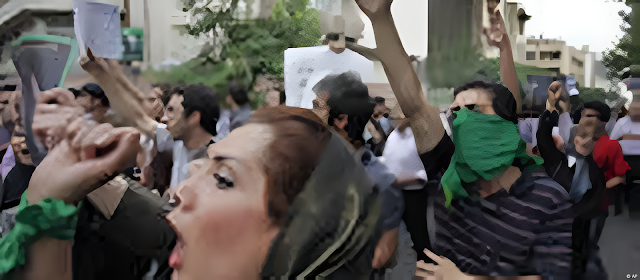
Protests in Iran and the Role of Ethnic Groups

Taher Shir Mohammadi - Deutsche Welle Persian - 24 June 2009

Protests Against the Announced Election Results

In regions where Iran’s ethnic minorities live, reformist candidates have historically won the majority of votes in presidential elections. How was it this time, and are ethnic groups also protesting the election results?

A Roundtable on the Role of Ethnic Groups in the Protests

Deutsche Welle discussed the role of ethnic groups in the current protests with Yousef Azizi Benitorof, an Iranian Arab writer and member of the Iranian Writers’ Association; Dr. Abdolsattar Doshoki, a Baluch political activist; and Alaeddin, an activist in the Azerbaijani National Movement in London. They shared their perspectives on the role of ethnic groups in the protests in Iran.

Ethnic Groups and the 1979 Iranian Revolution

Taher Shir Mohammad - Deutsche Welle Persian, February 12, 2009

1978 Tabriz protests

Ethnic groups played a significant role in the success of the 1979 Revolution. But were their hopes and demands fulfilled after the revolution? What is their current view of the revolution and the country's ongoing issues? Ethnic experts answer these questions for Deutsche Welle.

According to ethnic group experts, including Yousef Azizi Beniorof, an Iranian Arab writer, throughout modern Iranian history, from the Constitutional Revolution to the 1979 Revolution, Tehran could not complete its revolutions without the involvement of Tabriz.

Yousef Azizi Benitorof: Ethnic Issues Must Also Be Reflected in Media

Maryam Ansari – December 12, 2007, Deutsche Welle Persian

Yousef Azizi Benitorof, a writer and researcher on the ethnic issues of Iran's Arabs, believes that Iranian society is composed of diverse social classes and ethnic groups, leading to varied expectations from media outlets.